By Jeff Gallagher, founder of Made By Hemp. Helping people find real hemp since 2013. Last updated June 2026.
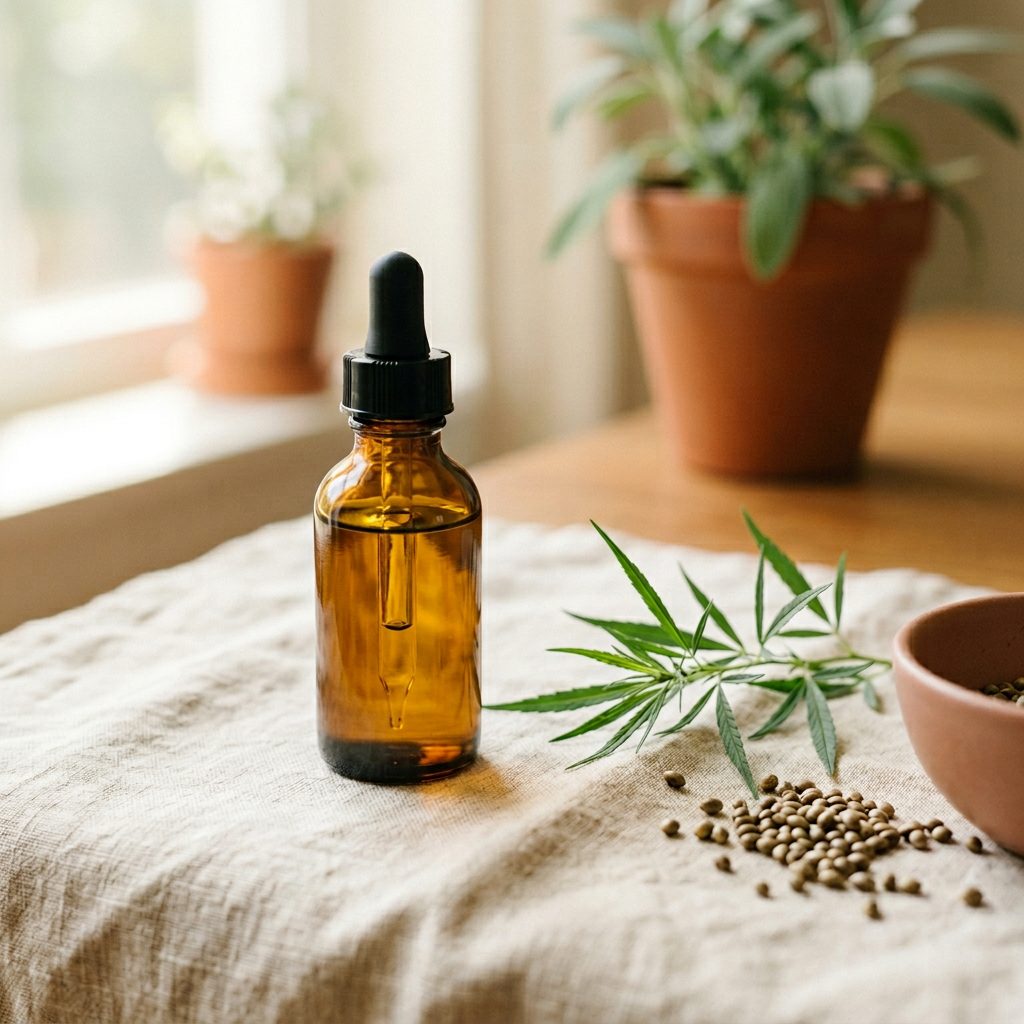
Hemp extract is an oil drawn from the aerial parts of the industrial hemp plant: the flowers, leaves, stems, and stalks. Those parts are rich in cannabinoid-bearing resin, so the oil carries a natural blend of phytocannabinoids, including cannabidiol (CBD). Most people use it as a wellness supplement. Before we get into what it does, let’s clear up a few common misconceptions.
Common hemp extract misconceptions
Because hemp is closely related to its psychoactive cousin, a lot of myths follow it around. Here are the ones we hear most.
Does hemp extract or CBD get you high?
No. To be legally considered hemp, the plant must contain less than 0.3% THC. THC (tetrahydrocannabinol) is the compound responsible for the high associated with marijuana, and at 0.3% the amount is far too low to be intoxicating. CBD is actually known to counteract the psychoactive properties of THC.
Hemp extract is not the same as what you’d find in the grocery store
You can buy hemp seeds and hemp seed oil at the store, but neither is the same as hemp extract. We break this difference down in the next section, but the short version: hemp seed oil comes from the seeds and contains no CBD, while hemp extract comes from the resin-rich aerial parts of the plant and does.
Properly sourced hemp extract is federally legal
When sourced properly, hemp extract is federally legal in the United States under the 2018 Farm Bill, as long as it contains less than 0.3% THC. That said, hemp laws vary from state to state and continue to change, and a few states restrict or prohibit hemp products. We only ship where hemp extract is legal, so the options at checkout reflect the rules for your state.
What does hemp taste like?
We’ve heard hemp described as both good and bad tasting. Honestly, it comes down to personal preference, like any other food. Hemp extract has an earthy flavor, so if that isn’t for you, a flavored product is an easy fix. If you’re curious, here’s our honest take on what hemp actually tastes like.
Hemp extract vs. hemp seed oil
This is the difference that trips people up most, and some companies blur it on purpose. The deciding factor is which part of the plant the oil is extracted from.

Hemp extract comes from the plant’s flowers, leaves, stems, and stalks, which are full of cannabinoid-rich resin. That’s why it contains high-quality phytocannabinoids such as CBD.
Hemp seed oil, as the name suggests, is pressed from the seeds. The seeds are a rich source of nutrients like fiber, protein, vitamin E, and omega fatty acids, but they contain no phytocannabinoids, so hemp seed oil has no CBD. It’s nutritious, just not the same product. You can read more in our post on the difference between hemp seed oil and hemp extract.
Types of hemp extract: full-spectrum, broad-spectrum, and isolate
Not all hemp extract is the same. The three main types come down to which compounds are kept in the final oil.
Full-spectrum keeps the complete range of cannabinoids, terpenes, and flavonoids naturally found in hemp, including the trace amount of THC that stays under the 0.3% legal limit. Many people choose it for the idea that these compounds work better together. You’ll find this across our Made By Hemp line.
Broad-spectrum keeps that wide range of compounds but has the THC removed, so it’s THC-free. It’s a popular middle ground for people who want more than just CBD but prefer no THC at all.
Isolate is pure CBD with everything else removed. It contains no THC and has no hemp flavor, which some people prefer. If you want to avoid THC entirely, browse our THC-free products.
How is hemp extract made?
Hemp extract is separated from the plant’s flowers, leaves, and stalks using a solvent. The two most common methods are:
- CO2 extraction uses pressurized carbon dioxide to pull the oil from the plant. It leaves no residual solvent behind and is widely considered a clean, premium method.
- Ethanol extraction uses food-grade alcohol to do the same job. It’s efficient and common, and the alcohol is removed during processing.
After extraction, the oil is usually refined and tested before it goes into a product. The method matters because it affects the purity of the oil and which natural compounds survive. If you want to go deeper, we explain how the raw oil is processed in our guide to raw, decarboxylated, and filtered hemp oil.
What’s inside hemp extract
Hemp extract is a high-CBD, low-THC oil with no intoxicating effects. Alongside CBD, it carries a range of other compounds, including additional phytocannabinoids, plant terpenes, flavonoids, and omega-3 and omega-6 fatty acids. That mix is what makes hemp extract such a versatile addition to a wellness routine.
Forms of hemp extract
Hemp extract shows up in a lot of different products, so you can pick the format that fits your routine:
- Tinctures and oils - drops taken under the tongue, the most flexible option for adjusting your serving.
- Capsules - a pre-measured serving in a simple, familiar form.
- Edibles and gummies - easy, flavored, and convenient.
- Topicals and skincare - applied directly to the skin.
- Pet products - formulated specifically for animals.
New to hemp extract? Start with our guide on how to take hemp oil to find the right serving for you.
How to choose a quality hemp extract
Not every product on the market is equal, so it pays to know what to look for:
- Third-party lab results for every batch. A current Certificate of Analysis confirms what’s actually in the bottle. You can see ours on our lab results page.
- Less than 0.3% THC, clearly stated. Reputable companies are upfront about their THC content.
- A short, real ingredient list. You should recognize what’s in the product.
- A track record. Look for a company that has been doing this for a while. We’ve been at it since 2013.
It’s also worth checking the date, since hemp extract does have a shelf life. Here’s how long CBD oil lasts and how to store it.
The endocannabinoid system (ECS)
We’ve talked about phytocannabinoids, which are cannabinoids that come from plants. Your body also makes its own, called endocannabinoids, and they support a network called the endocannabinoid system (ECS).
According to UCLA Health, the ECS is a complex network of signaling molecules that reaches every corner of the body, touching systems from memory to mood and beyond. It’s sometimes described as a control panel that helps the nervous system and immune system communicate. The ECS works through receptors labeled CB1 and CB2 that are spread throughout the body.
Here’s the interesting part: phytocannabinoids are similar enough to our own endocannabinoids that they can interact with those same CB1 and CB2 receptors. That’s why plant-derived cannabinoids like CBD are studied as a natural way to support the ECS. For a deeper look, read our introduction to the endocannabinoid system.
A quick history of hemp
Humans have used the hemp plant since as early as 2800 BCE. Today it’s a popular, environmentally friendly crop that helps detoxify soil, absorbs CO2, and needs less water than many traditional crops. Nearly every part of the plant, from seeds to stalks to roots, gets put to use, and hemp extract is one of those products.
Glossary of hemp terms
- Hemp extract - oil extracted from hemp’s aerial plant parts, containing a natural blend of phytocannabinoids.
- Hemp oil - often used interchangeably with hemp extract, but be cautious: some companies use this term when they really mean hemp seed oil.
- Hemp seed oil - oil pressed from hemp seeds. Nutritious, but contains no phytocannabinoids or CBD.
- Phytocannabinoids - natural chemical compounds found in hemp extract that have been studied for a range of effects.
- Endocannabinoids - natural chemical compounds, similar to phytocannabinoids, produced by our own bodies.
- Endocannabinoid system (ECS) - a series of receptors that interact with phytocannabinoids and endocannabinoids to help maintain balance in the body.
Frequently asked questions
Are CBD and hemp extract the same thing?
Usually, yes. The terms CBD oil and hemp extract are often used interchangeably, because most of the value people get from hemp extract comes from the CBD it contains.
What does CBD do?
CBD interacts with the endocannabinoid system, the body-wide signaling network described above. Because the ECS reaches so many systems, researchers are studying CBD closely. We’re not doctors, so we can’t diagnose, treat, or make health promises, but there’s a lot of information out there worth exploring as you decide what fits your routine.
Are hemp and CBD extracts legal?
Hemp-derived CBD extracts are federally legal in the United States under the 2018 Farm Bill, as long as they contain less than 0.3% THC. State laws are a different story: they vary widely and are still evolving, and a handful of states limit or ban these products. Always check the rules where you live, and know that we only ship to states where hemp extract is legal.
Are all CBD and hemp extracts safe to use?
Most hemp and CBD extracts are made from natural ingredients, but not every product on the market is reputable. Some contain only trace amounts of CBD, some hide harmful additives, some carry more THC than they should, and a few are labeled as CBD while containing none at all. Do your homework before you buy: read reviews, check the ingredient list, and look for third-party lab results so you know you’re getting a real product made from real hemp.
Which product should I choose?
Head over to our best hemp oil guide for suggestions, or browse the full shop.
These statements have not been evaluated by the Food and Drug Administration. These products are not intended to diagnose, treat, cure, or prevent any disease.